
Two things get funded out of the same technology budget.
Only one makes the next initiative cheaper, and most organizations don’t distinguish between them.
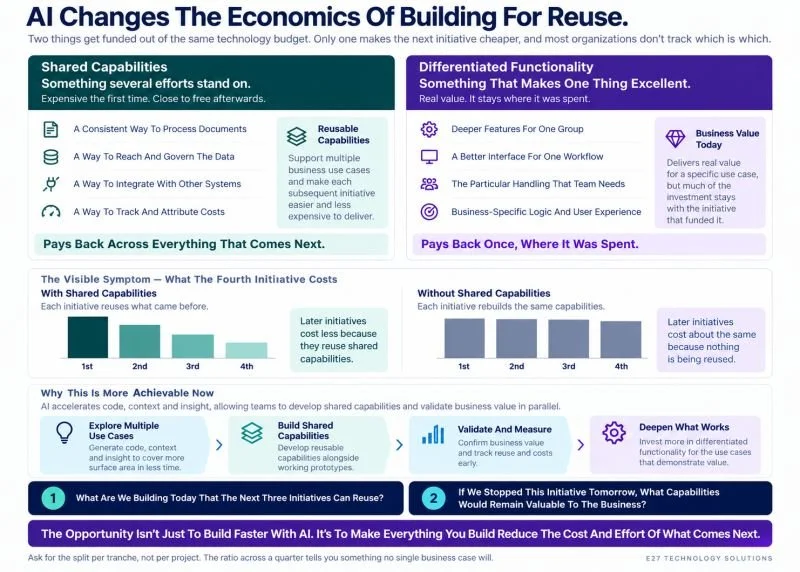
The first builds shared capabilities.
A consistent way to process documents, access governed data, integrate systems, or track costs. These investments support multiple business use cases, making each subsequent initiative easier and less expensive to deliver.
The second builds business-specific functionality.
Deeper features, better user experiences, and workflows tailored to particular business needs. Real value, but much of that investment stays with the initiative that funded it.
Both are necessary. And historically, balancing them was difficult.
Building shared foundations required substantial upfront investment. Business teams wanted working solutions, not infrastructure that promised value sometime in the future. So organizations often prioritized individual projects, even when that meant rebuilding the same capabilities repeatedly.
AI Changes That Equation
AI accelerates more than coding. It helps teams generate working solutions, develop shared understanding, and evaluate business outcomes in parallel.
Instead of building a platform first and applications later, teams can now explore multiple business use cases while developing the common capabilities they share.
Each prototype validates a business need while testing and strengthening the foundation beneath it.
The result is faster delivery today and less work required tomorrow.
The Test Is What Happens to the Fourth Initiative
If it still requires rebuilding the same document processing, data access, integrations, and operational controls, the organization isn’t benefiting from reuse, regardless of how quickly AI generated the code.
But when those capabilities are shared, each new initiative can focus more of its investment on differentiated business functionality.
Two questions help expose the difference:
What are we building today that the next three initiatives can reuse?
If we stopped this initiative tomorrow, what capabilities would remain valuable to the business?
The answers should influence how investments are funded and sequenced.
At E27 Technology Solutions, we believe AI creates an opportunity to move beyond the traditional tradeoff between delivering business value quickly and investing in long-term foundations.
Build thin, working solutions around real business needs. Develop reusable capabilities alongside them. Measure the costs and benefits of reuse. Then deepen the solutions that demonstrate value.
The opportunity isn’t just to build faster with AI. It’s to make everything you build reduce the cost and effort of what comes next.
Read the Full Series
AI Has Changed What We Can Build. It Should Change How We Plan.
AI Changes the Economics of Building for Reuse (this article)
AI Is Changing More Than How We Build. It’s Changing How We Invest.
Originally posted on LinkedIn on October 23, 2026. Join the conversation on LinkedIn.
Watch the walkthrough: Get There Sooner: Production Ready Prototyping, a 6-minute video in our Innovation Tutorials series.
Want to explore how this could work in your organization? Start a Conversation.